

Surya Kant Sworn In as 53rd Chief Justice of India, Begins 15-Month Tenure
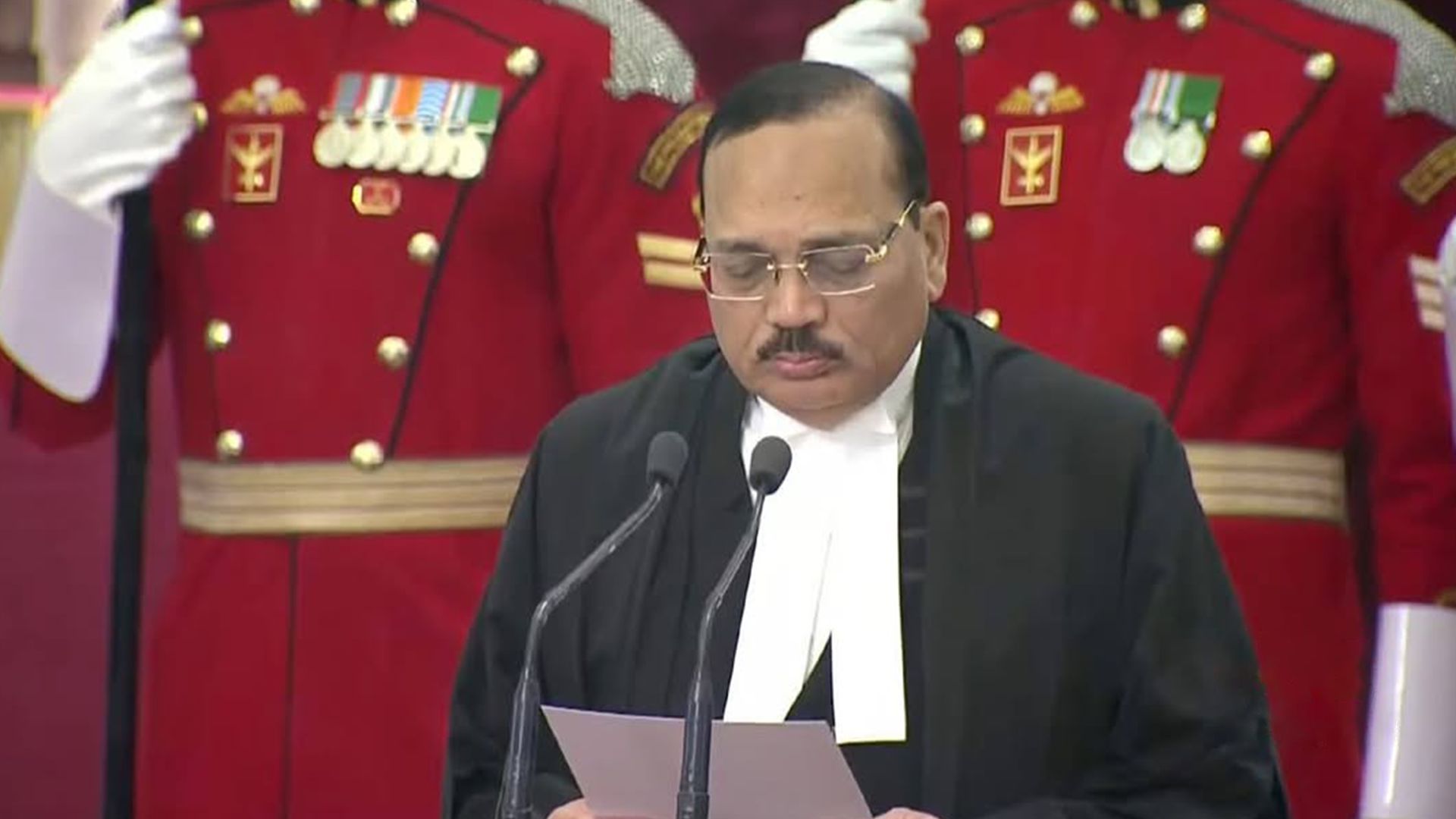
New Delhi: The swearing in of Justice Surya Kant as the 53rd Chief Justice of India (CJI) on Monday marked the onset of almost 15 months in the high office of the administration of justice in the country. The ceremony was conducted by President Droupadi Murmu and included high-ranking political figures, senior judicial officials, and constitutional officials.
Ceremony and Transition
Justice Kant was sworn in at Rashtrapati Bhavan in the presence of Prime Minister Narendra Modi, Home Minister Amit Shah, and other dignitaries. He succeeds Chief Justice B. R. Gavai, whose tenure ended on Sunday. After the ceremony, the two judges exchanged a handshake, symbolizing continuity in the Supreme Court.
Who Is Justice Surya Kant?
Justice Kant was born on 10 February 1962 in Hisar, Haryana, and started working as a lawyer in 1984. He worked in the district courts and subsequently at the Punjab High Court and on to the Haryana High Court, where he served as Advocate-General of Haryana in 2000, the youngest to do so.
In 2004, he was made a judge of the Punjab & Haryana High Court and was nominated Chief Justice of the Himachal Pradesh High Court in 2018, and joined the Supreme Court on 24 May 2019. He has, over the years, participated in key decisions on issues of abrogation of Article 370, a revision of electoral rolls, and a review of the sedition statute.
A 15-Month Term Ahead
Justice Kant is going to take office until 9 February 2027, when he attains the mandatory retirement age of 6.5. He has set a strong agenda in office, notwithstanding the comparatively brief tenure, and his main target is to cut the colossal pendency of cases in the Indian courts.
He has reiterated several times that empowering mediation and alternative dispute resolution systems will be instrumental in reducing delays in the judicial system.
Why His Tenure Matters
The Chief Justice of India, as the head of the judiciary, has a great administrative and judicial power, which includes the formation of Constitution Benches, casing of cases, and directing internal reforms. Justice Kant takes office when people are more than ever demanding justice, which is faster and more efficient.
His constitutional history places him in a better position to spearhead the Court handling high-impact, complicated cases and challenges in the administration. His emphasis on mediation may bring about early and practical reforms in court proceedings, observers say.
Key Challenges and Expectations
- Eliminating case backlogs: The Supreme Court has thousands of pending cases, and millions of cases in lower courts. Minimizing such delays will be one of the main challenges.
- Increasing mediation: Justice Kant has referred to mediation as a game-changer in the light of minimizing courtroom pressures and enhancing dispute resolution.
- Bolstering judicial independence: The promotion of institutional integrity and a guardian of constitutional values will continue to be the key to his position.
- Achieving results within a short period of time: Your 15 months in office will be important in terms of prioritisation.
Conclusion
The promotion of Justice Surya Kant is a milestone in the judicial system of India. His experience through the legal community of Haryana up to the apogee of the judicial process has now been decades of service to the law. When he assumes office, the challenge will be on his ability to deliver his vision of reform as a tangible change within a constrained time frame. How his leadership will influence the direction of the Supreme Court and the justice system, in general, is unknown to us, but it will become obvious in the following months.

