

Suicide Bombing in Islamabad Kills 12, Pakistan Blames ‘India Proxies’
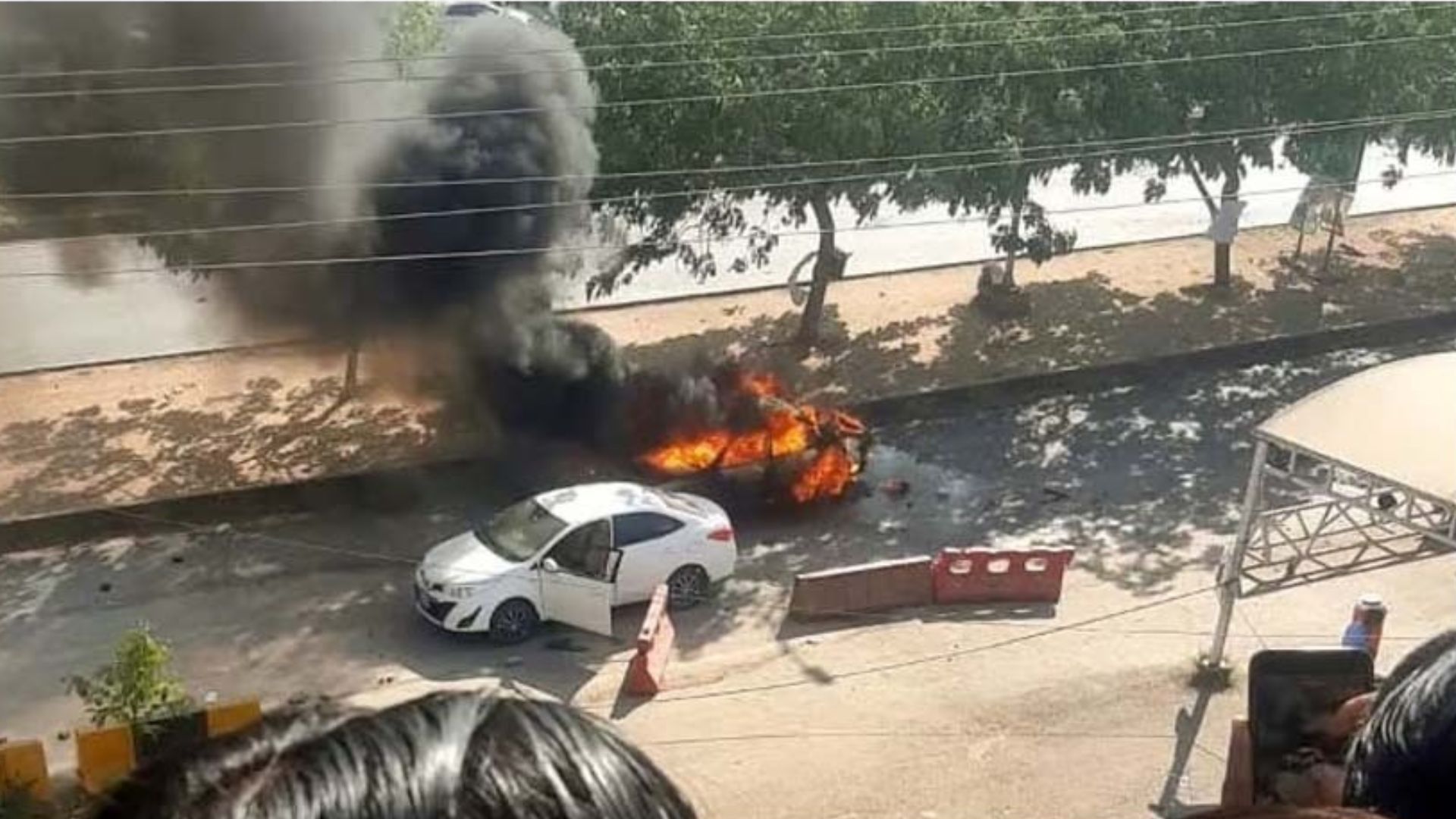
On Tuesday, a fatal suicide bombing shook the Pakistani capital city, Islamabad, killing at least a dozen people and injuring over 25 others in the vicinity of the compound District and Sessions Court. The strong blast, which occurred at noon at the G-11 area, broke the months of relative peace in the metropolis and plunged South Asian politics into a frenzy of politics once more, with Pakistani authorities alleging that the attack was perpetrated by what they termed as India-backed proxies with the assistance of Afghan soil.
The police and rescue officials reported that the bomber tried to enter the court premises during an hour when there were a lot of people in the hearing sessions. Security guards approached the suspect to check him at the gate, where he blew up the explosives he was carrying. The explosion demolished the surrounding cars, smashed windows, and threw shrapnel into the compound. Within minutes, emergency services arrived at the scene, but the blow created a trail of destruction. There had been bodies scattered towards the entrance as the panicked civilians and lawyers fled to cover. The police said that 12 individuals were killed immediately, including court staff and visitors, and at least 27 more were transported to hospitals in critical condition.
Interior Minister Mohsin Naqvi alleged that initial inquiries indicated foreign participation in the attack, describing it as a cowardly terrorist act aimed at creating instability in Pakistan. Prime Minister Shehbaz Sharif denounced the bombing and directly branded India as the architect of the act using proxies based in Afghanistan. According to Sharif, in a televised speech, the perpetrators were assisted and supported by networks that are against peace and the stability of Pakistan. These components work with the assistance of those beyond our borders. He also gave a promise to retaliate in a decisive and effective manner against any external efforts to generate havoc by Pakistan.
The event was labeled by the Defence Minister Khawaja Asif as a declaration of war against Pakistan, indicating that the attack was one of a series of organized violence. He alleged a report by the intelligence that the network behind the bombing in Islamabad was connected to groups funded and operated by the Indian agencies, and used the Afghanistan territory as a launchpad. Asif also said that the security forces in Pakistan were on full alert and measures could be taken in retaliation in a situation where conclusive evidence was found.
The Indian government was quick to refute the accusations of Islamabad and termed them false allegations being politically related. As indicated by the Ministry of External Affairs in New Delhi, India did not have any role to play and accused Pakistan of using incidents of terrorism to distract from its failures at home. The statement of India pointed to the fact that it was categorically opposed to any kind of terrorism and that Pakistan should make a transparent investigation before blaming anybody. Meanwhile, the Taliban-led government of Afghanistan also denied its involvement, and its spokesperson added that Kabul will not grant its soil to be used against any of its neighbors and that making false accusations would further worsen the already strained ties.
Even though there was no militant group that claimed responsibility at once, the authorities believe that the Tehrik-e-Taliban Pakistan (TTP) or the splinter groups, who have also reported the same attacks previously, are involved. According to the security sources, the way the explosion was carried out and the time of the day indicates a professional operation. Investigators found ball bearings and electronic parts in the scene of the blast, which showed that there was a high-grade explosive device was used. One of the senior counterterrorism officials revealed to the local media that intelligence services were tracking phone logs and movement information to determine some of the possible handlers or accomplices.
The attack follows a similar attack on a cadet college in South Waziristan a day earlier, with a number of people being killed in a gun battle with militants. According to analysts, the two incidents are possibly a part of a bigger wave of coordinated strikes to destabilize the security institutions in Pakistan. Unlike other parts of the nation that have always been regarded as relatively safe cities, Islamabad has somehow been free of such massive violence over the past years, and thus, the bombing on Tuesday was an extremely unsettling security infringement.
Following the explosion, the government blocked the surrounding vicinity around the court complex, and they sent in more policing and military forces to avert the occurrence of other incidents. Forensic teams were investigating the scene, and the capital hospitals had asked people to donate blood to the injured. The government proclaimed a day of mourning, and flags in federal buildings were put at half-mast. TV channels captured images of ambulances taking the victims to the Pakistan Institute of Medical Sciences and the desperate family members standing outside in search of their loved ones. Attorney associations in the nation declared the boycott of court sessions in a sign of protest against the assault, as well as in solidarity with the families of the victims.
There were eyewitnesses who talked of horrendous situations and confusion after the blast. One lawyer who has come out just in time told me, I was just leaving the court-room when the whole house shook. The smoke, screams, and people running around. It seemed as though the earth had blasted open at the core. One of the residents of a local market stated that the explosion was so intense that it broke the windows of a few blocks.
Security analysts indicate that the fact that the government immediately accused India of being involved shows the tremendous levels of mistrust that have been the hallmark of the relationships between the two nuclear-armed neighbors. Pakistan has continually accused India of funding insurgent groups within its territory, and India has accused Pakistan of hosting militant groups that threaten Indian interests. The recent accusations are likely to cause additional decline to an already tense situation in the region.
There have been calls by international observers to restrain and conduct an elaborate and independent investigation into the bombing. The United Nations said that it was sad that the victims had died, and therefore, the region should unite in fighting terrorism. Analysts caution that in case Pakistan takes retaliatory action on preliminary assumptions, it might boil down to diplomatic or even a military conflict.
Evening, Islamabad was still under high security, with more and more checkpoints and roadblocks throughout the city. People were advised not to move into the crowds and report suspicious people. Life in the capital was slowly getting normal, but the fear and uncertainty caused by the attack were lingering in the air. To most of the Pakistanis, the tragedy became a dark reminder that terrorism, despite decades of military crackdowns and intelligence operations, is still a menace to the already unstable state of the country.
The Islamabad bombing has not just taken the innocent lives but has also triggered the past mistrust and enmity among regional powers. As Pakistan cries over the loss of its people and swears revenge, the question concerns whether the recent tragedy will be able to make the nation united in the fight against extremism or will bring the region closer to the political clash.

