

Trump Envoys and Russian Officials Conclude ‘Constructive’ Peace Talks in Miami
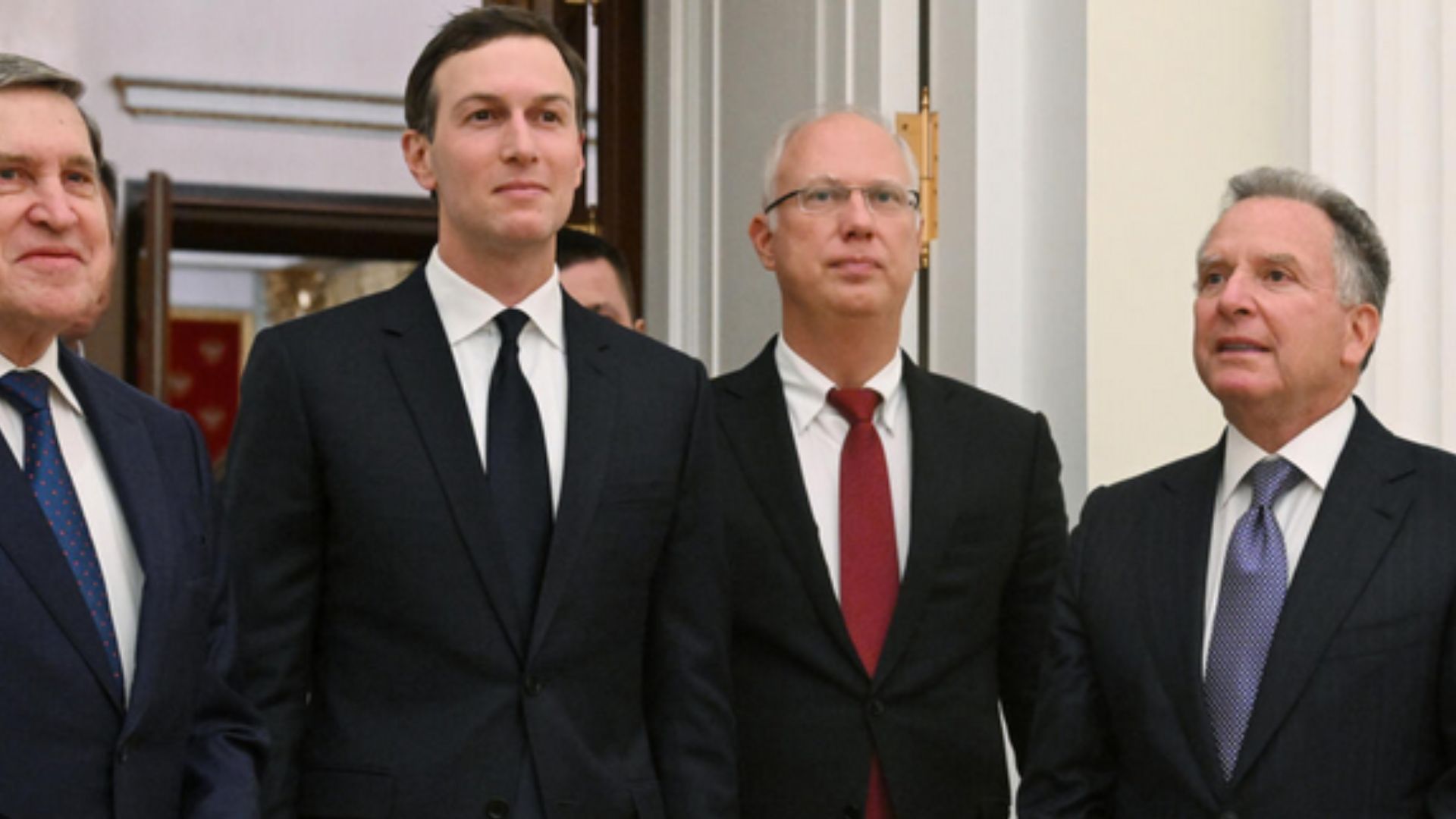
MIAMI, FLORIDA – Intense peace talks to end the nearly four-year war in Ukraine ended in Miami this weekend with both American and Russian delegates terming the talks as “constructive.” The negotiations, held during the period between 19 and 21 December 2025, are the biggest diplomatic effort so far made by the Trump administration to get a ceasefire before the new year.
The Players in the Room
The meetings were conducted at an unknown place in South Florida. Steve Witkoff, President Trump’s Special Envoy on Peace, and Jared Kushner and White House staffers Josh Gruenbaum headed the American delegation. Kirill Dmitriev, one of the major Russian special envoys, was representing the Kremlin and was one of the main participants in the back-channel negotiations between Moscow and Washington.
Although the Ukrainian officials did not directly meet the Russian delegation, another Ukrainian delegation, headed by Rustem Umerov, Secretary of the National Security and Defence Council, spent three days in Miami having intensive “parallel” negotiations with the U.S. and European allies in order to harmonize the details of the American-written offer.
Progress on the “20-Point Plan”
The main point of the negotiations is the 20-point peace plan by President Trump. Although the entire text is still secret, according to the information available about the deliberations, the framework covers some of the most crucial and controversial pillars:
- Territorial Realities: The plan is reportedly proposed as having a “frozen” front line, with de facto Russian administration of portions of Donbas and Crimea, and creating demilitarized zones in the disputed regions like Kherson and Zaporizhzhia.
- Security Assurances: The future of Ukraine in NATO continues to be a sore issue. Reportedly, the U.S. offer comprises “ironclad” bilateral security guarantees to Kyiv in return for a long-term NATO membership.
- Economic Reconstruction: The draft talks about a multibillion-dollar reconstruction fund that might involve a part of frozen Russian assets to reconstruct Ukrainian infrastructure.
After the Sunday ending, Witkoff posted a statement on X (previously Twitter), claiming that Russia “remains fully committed to achieving peace” and “highly values” the United States’ mediation. This sentiment was echoed by Dmitriev to Russian state media, where the sessions were described as a “working process” that was “proceeding constructively.”
Cautious Optimism in Kyiv and Moscow
President Volodymyr Zelenskyy gave a cautiously optimistic address on December 22, 2025, on the occasion of the Diplomatic Service Day of Ukraine, pronouncing an early version of the 20-point plan as “quite solid.” Zelenskyy affirmed that the Americans were giving his team a full brief on the outcome of their face-to-face meeting with the Russians. “The plan exists,” Zelenskyy noted. “It is probably not perfect… but the important thing is that we have progress.”
But the road to the ultimate deal is still a difficult one. In Moscow, a Kremlin assistant, Yuri Ushakov, indicated that Russia continued to have major reservations on some European changes in the plan, especially the admission of international monitors in demilitarized areas.
What’s Next?
The discussion leaves Florida once the delegations start to talk about the “sequencing” of the steps, i.e., the timeline when a ceasefire will be implemented, and the withdrawal of heavy weaponry commenced. Through an interview with the press on Monday, President Trump stated that the discussions are “going okay,” but there is still “tremendous hatred” to overcome.
According to diplomatic sources, if this so-called “Miami Momentum” continues, a formal summit between heads of state would be proposed in early 2026. So far, the “constructive” tone in Miami has provided a glimmer of hope for a diplomatic escape out of the killing field in Europe since World War II.

