Major Chinese Bridge Collapses into River Months After Opening
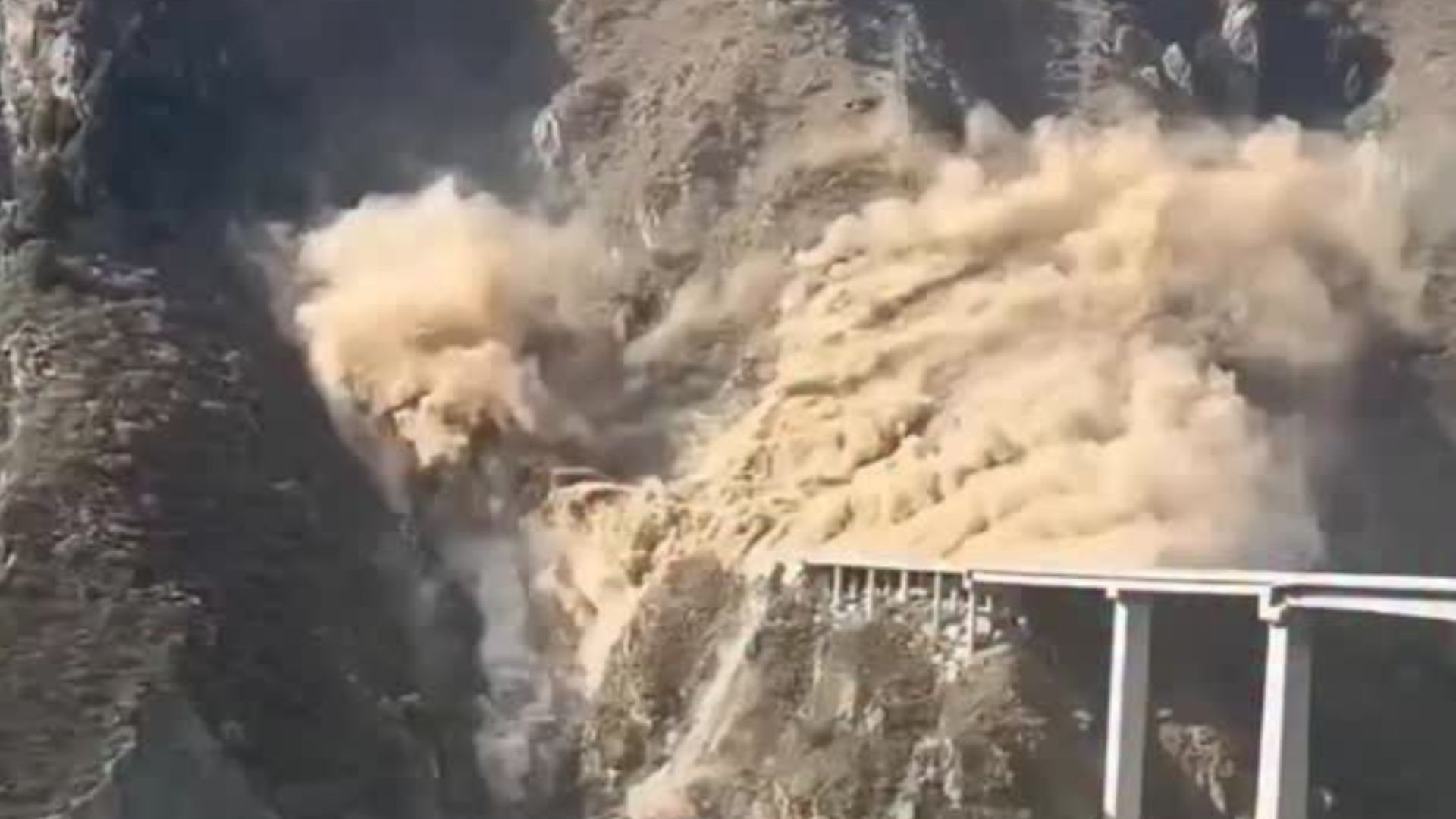
A colossal bridge in the south-western Sichuan Province in China has failed disastrously in a river, only a few months after it was inaugurated to the community. It was one of the key national highway projects that were related to the Hongqi Bridge, which was situated close to Maerkang City and connected central China to the Tibetan Plateau- a symbolic figure of the fast paced growth of infrastructures by Beijing into the rugged regions of the country. The collapse that has taken place this week has drawn a broad subject of concern regarding the quality of construction, the stability of the geology, and the long-term control of the ambitious state-financed projects.
Local authorities said that the Hongqi Bridge was closed to traffic a day before the incident following the engineers’ detection of ground movements and cracks on the right side of the bridge approach. The precautionary closure nevertheless collapsed the next morning, with large parts of the structure collapsing into the gorge beneath, and throwing clouds of dust and debris into the air. Luckily, there were no cars in the bridge, and there were no victims indicated.
The videos uploaded to the Chinese social media sites depict the event when the roadbed of the bridge collapsed and the massive concrete structure disintegrated and fell into the river in just a few seconds. The video immediately became viral, leading to anger, shock, and demands of responsibility. The collapse has since been confirmed by authorities to have been caused by a geological landslide, but many who were present at the time have thought that poor engineering and construction shortcuts could have been contributing factors.
The Hongqi Bridge, which spans over 700 meters of the Dajin River, was officially opened earlier this year with much acclaim on the part of the local authorities. It was billed as an important connection point in the G317 national highway, an important road between Sichuan and Tibet. The bridge was aimed at enhancing connectivity and economic integration in the region to enable the remote communities to enjoy trade and tourism opportunities. Its successful completion was hailed as another milestone in the decades-long struggle by China to modernize infrastructure despite the challenging topography.
But the crash has soon turned that icon of advancement into an embarrassment to the nation. Online forums like Weibo are being used by many Chinese citizens to raise questions on how a newly constructed bridge that had cost hundreds of millions of yuan to be built could collapse within such a short period. Other users made parallels with past occurrences where roads, tunnels, or bridges were damaged soon after their construction, and they were mostly attributed to the haste of building schedules and a lack of geological survey.
Analysts who have worked on infrastructure construction in mountainous areas have observed that the complicated topography of the Sichuan region is a significant challenge. The province is located on the border of the Tibetan Plateau, where the excessive amount of rain, earthquake activity, and unsteady ground cause the construction of roads and bridges to be quite dangerous. Here, the first reports indicate that a slope that held one side of the bridge started to move, ultimately causing the collapse. Engineers indicate that landslides may be unpredictable, but with proper site examination and slope-reinforcements, the danger can be mitigated, which leads to questions of whether proper safety precautions have been taken or not.
Local government officials have mentioned that an emergency investigation is being carried out. Geological specialists and structural engineers have been sent to the site in order to identify the actual cause of the collapse. An area around it has been isolated and surveillance systems have been placed to check whether there is any additional movement of the ground. The government has also vowed to conduct an extensive inspection of the other bridges and other roads constructed in the same condition in Sichuan to avoid the occurrence of similar events.
The government of Maerkang City government has made a short, hurried statement that preliminary investigations have shown that the withdrawal was due to a landslide on the right bank of the river, thus causing the section of the bridge approach to collapse. There are no reported injuries. The reason behind the geological instability is yet to be discovered. The confidence of the people is, however, flimsy, and most citizens require more transparency and accountability from the construction companies and the local government that controls the construction of infrastructure.
“Preliminary findings indicate that the collapse was caused by a landslide on the right bank of the river, leading to the failure of the bridge approach section. No injuries have been reported. The cause of the geological instability is still under investigation,”.
The confidence of the people is, however, flimsy, and most citizens require more transparency and accountability from the construction companies and the local government that controls the construction of infrastructure.
The supposed company that is responsible in the construction of the Hongqi Bridge has not issued a statement. Its advertising content and news about its projects were taken off its site soon after the incident, which also added more speculation. Over the past few years, various Chinese government-owned and local building firms have been under examination over the corners they cut in order to deliver on time or to save a few dollars due to intense competition in contracts awarded by the government. Although this infrastructure boom has changed the face of China, analysts indicate that the need to open new infrastructure too soon often has an overriding effect on the quality of sustainable infrastructure and safety.
In addition to the domestic effects, the bridge collapse is also an issue for the international reputation of China as a giant exporter of infrastructure knowledge with its Belt and Road Initiative. It has constructed roads, rail, and bridges in Asia, Africa, and Europe, frequently boasting that it has acquired skills in engineering to a global level. Any domestic setbacks, especially of major projects, would jeopardize the reputation of Chinese construction quality overseas.
Such disasters are also determined by environmental factors. The geography of Sichuan is one of the most difficult in China, subject to landslides, floods, and frequent earthquakes. Scientists have continuously cautioned that increased urbanization and deforestation can further unstable mountain slopes, making them vulnerable to collapse once it rains heavily. As weather extremes increase due to climate change, these weaknesses are bound to be exacerbated further in future years. The Hongqi Bridge event can thus turn out to be a bleak warning of the increased overlap between climate resilience and infrastructure safety.
At the moment, recovery teams are cleaning up the debris and making the riverbanks stable. The remains of the bridge, with huge pieces of reinforcement concrete, are now floating about the river valley. Traffic diversionary routes have been put in place to continue regional transport, but with the bridge already being lost, the local business and transport has been severely affected.
People of Maerkang, most of whom used the bridge in their everyday life, were happy that no one was hurt, but at the same time, they were upset at the government’s failure to give straightforward responses. This was the case with one local business owner who was quoted as saying that, at the time of opening the bridge, they were very proud. Now it is lost in half a year. How can we trust the next one?”
Since China is still in the process of massive infrastructure development, the failure of the Hongqi Bridge will probably spur the country to conduct national checks on bridges constructed over recent times, particularly in geologically prone regions. It highlights how critical enhanced quality assurance, external safety inspections, and after-construction surveillance mechanisms that are able to establish early warning signals prior to disaster occurrences are critical.
The collapse of the Hongqi Bridge is not merely the collapse of the structure, but it is a symbolic failure as well. It brings out the conflict between the rate of development and engineering integrity, ambition, and responsibility. Although one day the investigation might help identify the technical cause, the lesson that the whole world should learn is that in the race of building safety should not come after.