

Gaganyaan Mission: ISRO Successfully Completes Qualification Tests for Gaganyaan Drogue Parachutes
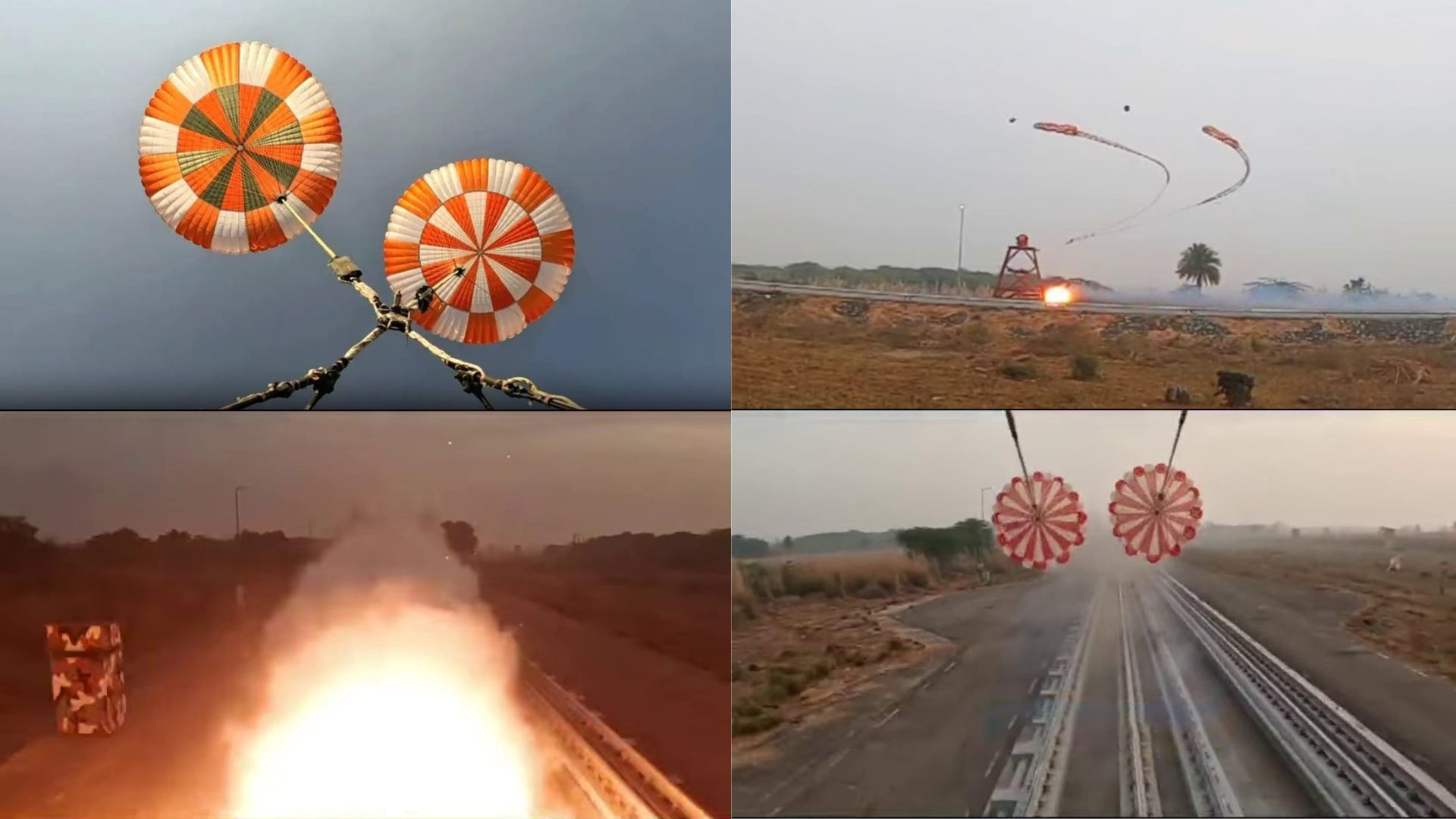
CHANDIGARH -The Indian Space Research Organization (ISRO) successfully passed a series of qualification tests related to Gaganyaan drogue parachutes in a major step forward in the human spaceflight program in India. None of the other components were tested, but the Rail Track Rocket Sled(RTRS) facility in Chandigarh conducted the tests on December 18 and 19, 2025, to verify the final system needed to ensure the safety of Indian astronauts.
The success of the campaign is an assurance that the parachute system, which is the “brakes” of the spacecraft, is strong enough to cope with the violent relationship of the re-entry forces of the atmosphere.
The Science of a Safe Return
By the time the Gaganyaan crew module gets back to earth, the spacecraft will have a speed of several kilometers per second. To make a safe “splashdown” in the ocean, the module has to be stabilized and decelerated progressively.
The mid-alteration phase is governed by the drogue parachutes, which are the workhorses. These parachutes are some of the conical ribbon-shaped types that are measured at about 5.8 meters in diameter to be released at a time when the module is still moving at high speeds. Their primary roles are:
- Stabilization: Making sure the module is not tossed or is not spinning out of control on hitting the denser air layers in the atmosphere.
- Deceleration: Slowing down the speed to such a point that the very large “Main Parachutes” can actually be deployed without being torn to pieces by the wind resistance.
Rigorous Testing at the “Rocket Sled”
These were conducted in the Terminal Ballistics Research Laboratory (TBRL). The RTRS facility does not involve the typical flight test, but instead utilizes a high-speed rail track where sleds with rockets simulate the high-level of aerodynamic loads the parachutes will experience in real time.
According to ISRO, the two-day test series concentrated on:
- Deployment Reliability: This is to make sure that the parachutes always open flawlessly, even under “off-nominal” (emergency) conditions.
- Structural Integrity: The canopy and lines must be checked to ensure that they can stand the tremendous “opening shock,” the sudden jerk as the parachute snags the air.
- Varying Parameters: This involves testing the system against different speeds and angles in order to test all possible scenarios during re-entry.
ISRO assured that every test goal was attained, indicating the robustness and reliable operation of the system despite the strong fluctuations in the flight conditions.
A Multi-Agency Success
This was an Indian milestone achieved through the cooperation of some of the leading Indian institutions:
- Vikram Sarabhai Space Centre (VSSC): Led the design and development.
- Aerial Delivery Research and Development Establishment (ADRDE): Provided technical expertise in parachute textiles and dynamics.
- TBRL (DRDO): Provided the specialized testing infrastructure in Chandigarh.
What’s Next for Gaganyaan?
With the drogue parachutes now “qualified,” ISRO has cleared one of the most technically challenging hurdles of the mission. This sets the stage for a busy 2026, which is expected to see at least two uncrewed missions.
The first of these flights will carry Vyommitra, a female-looking humanoid robot designed to monitor life-support systems and investigate human behavior in microgravity. These uncrewed missions will be the final dress rehearsals before the historic crewed mission,which aims to send three Indian astronauts (Gaganyaatris) into a 400-kilometer orbit for a three-day mission.
India has a chance of becoming one of the few countries that possess the ability to conduct independent human spaceflight by successfully learning the difficult physics of parachute deceleration; this way, it can join the elite group of nations -the USA, Russia, and China.
