National Mathematics Day: The Genius of Srinivasa Ramanujan and the Magic of Math Outside the Classroom
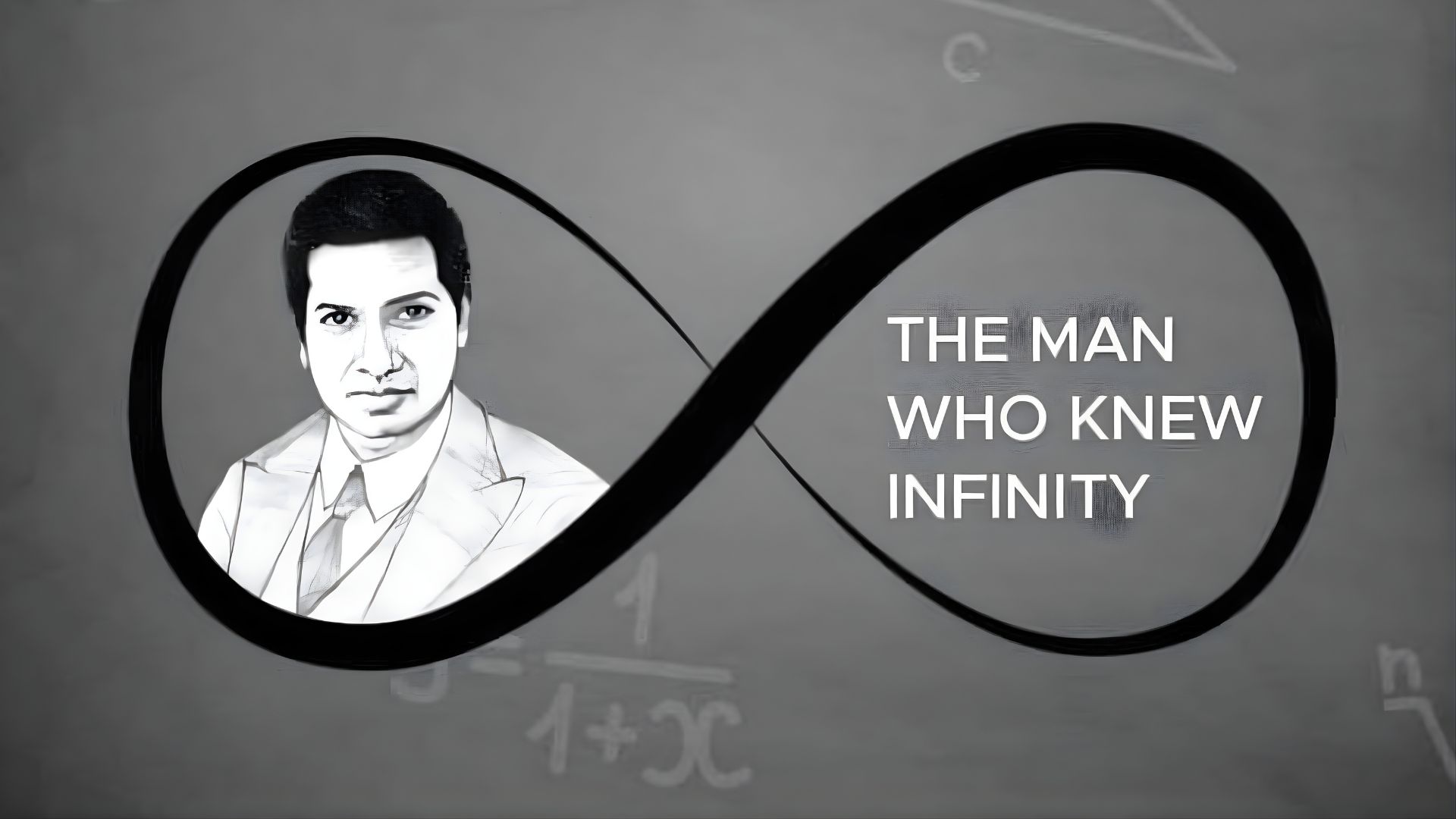
December 22, 2025, in New Delhi, India, is celebrating today what is now a calendar date called the National Mathematics Day in memory of the 138th birth anniversary of the self-taught genius mathematician extraordinaire, Srinivasa Ramanujan. The country classes are, on the contrary, as full of chalk on the board as before, but the fetes of the modern day have left the textbook behind them, and turned the school and the college into a school of creativity, logic, and mathematical magic.
The Legacy of the Man Who Knew Infinity
Srinivasa Ramanujan was born in 1887 in the state of Tamil Nadu, Erode, and his life story is one of the most piercing stories ever recorded in the history of science. Though he had no formal introduction to higher mathematics, he managed to figure out almost 3,900 results of which were so new as to be completely incomprehensible to his contemporaries at the then-Cambridge University.
Through his study of infinite series to the partition function, Ramanujan’s notebooks still remain a treasure trove to the present day researchers. His most famous example of this was his story about the “Taxicab Number” (1729), the minimal number that can be expressed as the sum of two cubes in two ways (1^3 + 12^3 and 9^3 + 10^3) – the fact that many people would have considered would be represented as a number.
2025 Theme: “Mathematics, Art, and Creativity.”
This year the celebrations facilitate the concept that math is not about memorization, but it is a creative tool of transformation. Convergence of reason and beauty is being witnessed in the categories of Mathematics, Art, and Creativity.
There are some of the larger events currently being celebrated in India:
- Srinivasa Ramanujan Talent Search: In states such as Bihar, students in classes 6 through 12 are selected in state-wide talent tests, where the winners would get laptops and awards of excellence as an incentive to do further research.
- Math-Art Exhibitions: Students are presenting their projects where the relationship between geometry and architecture, fractals and nature is also demonstrated; the magic of math is revealed in the world around us.
- Digital Numeracy Drives: Non-governmental organization and educational technology providers have initiated the creation of digital bridges via mobile math labs to rural communities to reduce the digital divide so that another Ramanujan, no matter his or her background, can access the tools of modern science.
Breaking the “Math Phobia”
Fearing the subject is one of the goals of the National Mathematics Day. Presenters at various conferences being convened in the contemporary world at research institutions like the Indian Institute of Space Sciences and Technology (IIST) have emphasized that the basic idea of Math Beyond the Classroom is to apply reasoning to real life, e.g., how to spend money at home and how our favorite social media apps work according to the algorithm.
The life of Ramanujan teaches us the lesson that curiosity is the best teacher, and that is what a senior educator told us at a morning assembly in New Delhi. It is not only a man we are celebrating, but we are creating a culture of looking for answers and using our gut feelings as highly as the last answer by celebrating this day.
A Global Impact
Although the day is a national holiday in India, the influence of Ramanujan is universal. His equations are applied now to fields that he could have in no way imagined, like string theory and black holes physics. With India becoming one of the leaders of AI and Data Science in the world, the contributions of the mathematical titans such as Ramanujan, Aryabhata, and Brahmagupta become more significant than ever.
By now, as the sun sets on this 22 nd of December, the message is very clear: Mathematics is the universal language that connects our past heritage with our future innovations.