

ISRO Successfully Launches LVM3-M6 Rocket Carrying BlueBird Block-2 Satellite from Sriharikota
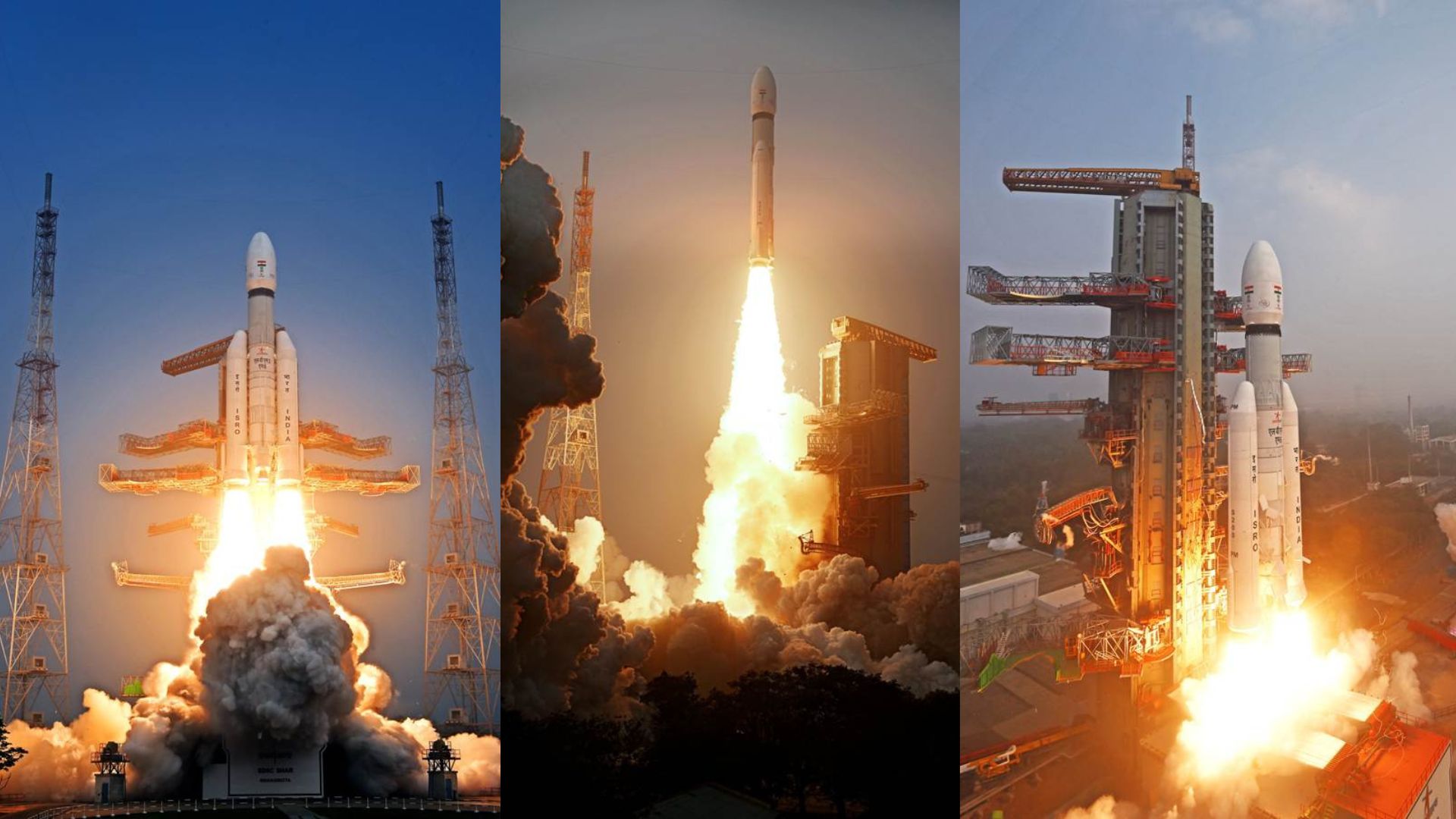
On Wednesday, December 24, 2025, the Indian Space Research Organization (ISRO) made another significant breakthrough in the growing space mission of India when it made a successful takeoff of the LVM3-M6 rocket that was carrying the BlueBird Block-2 mission spacecraft. The heavy-lift launch vehicle took off successfully out of the Satish Dhawan Space Centre, bolstering the reputation of India as an emerging provider of reliable and competitive launch services as far as the global space scene is concerned.
This was the sixth mission of the LVM3 rocket, which is the most powerful launch vehicle of ISRO and can launch heavy satellites to low Earth orbit. After launch, the rocket underwent a sequence of scheduled stage separations and burns, finally putting the BlueBird Block-2 spacecraft into the desired orbit. The mission controllers reported that everything went nominally, and the spacecraft was actually separated as expected.
BlueBird Block-2 is another developmental communications satellite that is modeled to provide space mobile connectivity. The spacecraft was designed to serve a commercial client based in the world and is part of a larger project to offer direct broadband and cellular services out of space, especially to remote and underserved areas. In this mission, ISRO again showed that it was able to fulfill complex commercial needs in terms of heavy loads and challenging orbital specifications.
LVM3 rocket, as it is commonly known, the workhorse of the ISRO, is over 43 metres high and can transport loads of up to or more than four tonnes to low Earth orbit. Since its creation to facilitate the plans of human spaceflight of India as a part of the Gaganyaan programme, the launch vehicle has evolved gradually to accommodate high-value commercial and scientific missions. The LVM3-M6 flight is yet another confirmation that the rocket is a reliable and versatile one.
According to the officials, this mission underscores the growing international trust in the launch capabilities of India. Through the successful launch of an enormous and technologically advanced satellite, ISRO improves its competitive presence in the market of global satellite launches, which are currently experiencing an increasing demand for low-Earth orbit constellations and the next-generation communication systems.
It is also a case of strategic significance of the Sriharikota spaceport situated on the east coast of India. The Satish Dhawan Space Centre has, over the years, been developed into a global-level launch station, which could support any kind of missions, such as small satellites and heavy launches like the LVM3. Ongoing infrastructural and tracking system enhancements have enabled ISRO to undertake more complex and commercially impactful missions.
In addition to its commercial value, the successful completion of the LVM3-M6 mission is a boost to India’s overall space roadmap. Under the Indian space reforms, ISRO is already planning the future human spaceflight tests, mission to other planets, and greater involvement of the private sector. The successful launch of every project boosts the technical confidence and operational experience of future ambitious projects.
With the worldwide demand for satellite-based connectivity ever increasing, missions like BlueBird Block-2 show how ISRO is set to be at the forefront of technology, commercial, and global partnerships. The successful LVM3-M6 mission is another indication that India is not merely a spacefaring country, but a reliable partner in the fast-changing space economy of the world.
